

Category: Resources
9 Benefits of a Great Leadership Development Program
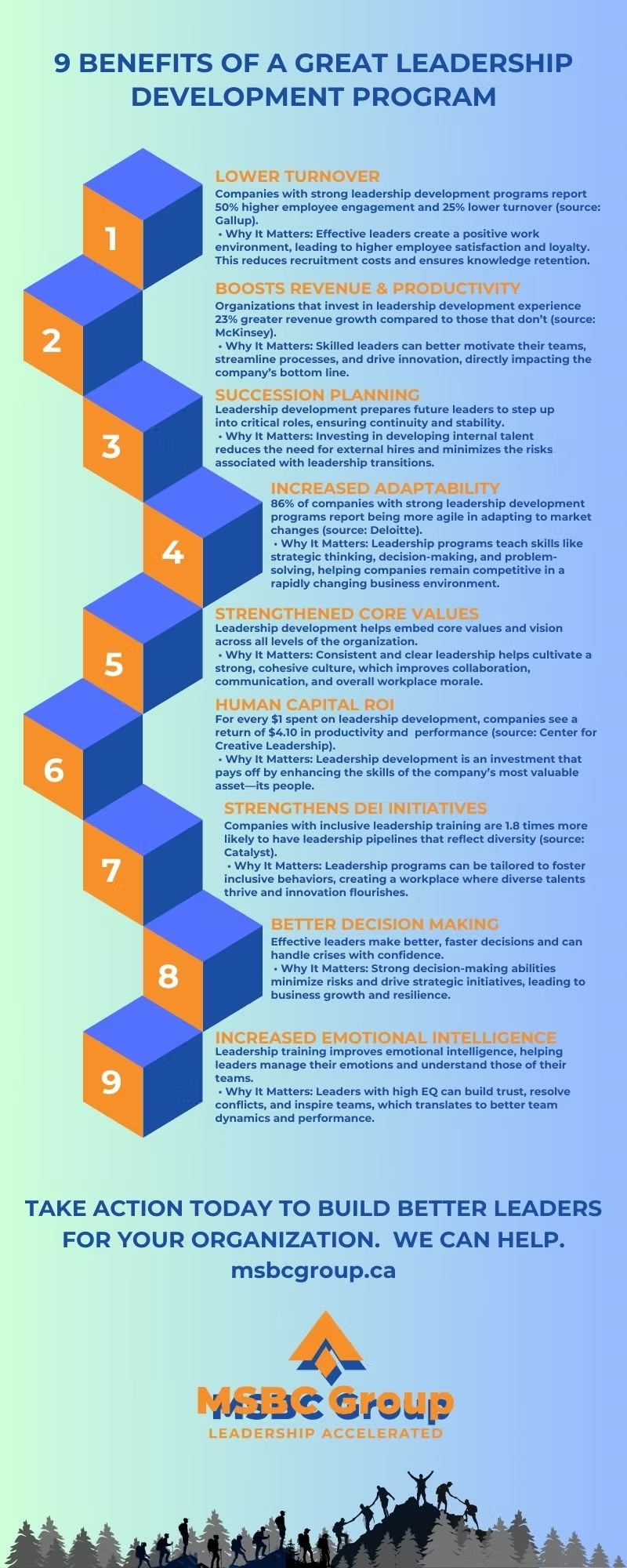
LOWER TURNOVER
Companies with strong leadership development programs report 50% higher employee engagement and 25% lower turnover (source:
Gallup).
• Why It Matters: Effective leaders create a positive work environment, leading to higher employee satisfaction and loyalty.
This reduces recruitment costs and ensures knowledge retention.
BOOSTS REVENUE & PRODUCTIVITY
Organizations that invest in leadership development experience 23% greater revenue growth compared to those that don’t (source:
McKinsey).
• Why It Matters: Skilled leaders can better motivate their teams, streamline processes, and drive innovation, directly impacting the
company’s bottom line.
SUCCESSION PLANNING
Leadership development prepares future leaders to step up into critical roles, ensuring continuity and stability.
• Why It Matters: Investing in developing internal talent reduces the need for external hires and minimizes the risks
associated with leadership transitions.
INCREASED ADAPTABILITY
86% of companies with strong leadership development programs report being more agile in adapting to market changes (source: Deloitte).
• Why It Matters: Leadership programs teach skills like strategic thinking, decision-making, and problem- solving, helping companies remain competitive in a rapidly changing business environment.
STRENGTHENED CORE VALUES
Leadership development helps embed core values and vision across all levels of the organization.
• Why It Matters: Consistent and clear leadership helps cultivate a strong, cohesive culture, which improves collaboration,
communication, and overall workplace morale.
HUMAN CAPITAL ROI
For every $1 spent on leadership development, companies see a return of $4.10 in productivity and performance (source: Center for Creative Leadership).
• Why It Matters: Leadership development is an investment that pays off by enhancing the skills of the company’s most valuable
asset—its people.
STRENGTHENS DEI INITIATIVES
Companies with inclusive leadership training are 1.8 times more likely to have leadership pipelines that reflect diversity (source:
Catalyst).
• Why It Matters: Leadership programs can be tailored to foster inclusive behaviors, creating a workplace where diverse talents
thrive and innovation flourishes.
BETTER DECISION MAKING
Effective leaders make better, faster decisions and can handle crises with confidence.
• Why It Matters: Strong decision-making abilities minimize risks and drive strategic initiatives, leading to business growth and resilience.
INCREASED EMOTIONAL INTELLIGENCE
Leadership training improves emotional intelligence, helping leaders manage their emotions and understand those of their teams.
• Why It Matters: Leaders with high EQ can build trust, resolve conflicts, and inspire teams, which translates to better team dynamics and performance.


Think building a business is all about excitement and big breaks? It’s time to embrace the less glamorous truth that might be the key to your success.

Much of what business leaders do daily is repetitive and mundane, involving what I call the WRR (wash, rinse, repeat) cycle. Sustainable growth requires time, effort, and a willingness to embrace the less glamorous aspects of business.
Over the years, we continue to observe many business leaders seeking quick fixes and with questionable approaches because the traditional path to growth feels tedious and slow. They’re tempted by lifestyle goals that demand immediate results, leading them to abandon fundamental processes and pursue “too good to be true” shortcuts promised by social media gurus, TikTok memes and well-meaning but ill-equipped friends or relatives. They are led to believe that all they have to do is build their personal brand overnight and their products will sell themselves.
Entrepreneurs are increasingly investing significant sums in sessions with marketing gurus and influencers, hoping for instant success. These gurus often peddle “real” stories of transformation and those who follow their “plan” will achieve quick success beyond their wildest dreams. The only people who fail at the “plan” are those who do not follow it to a tee. The reality is, however, that true success stems from hard work, perseverance, and focused action. A deeper look at the success of the guru’s followers, often reveals a darker truth.
If you’re feeling disenchanted with the grind of business, it’s time to reignite your passion and shift your perspective. When building a business, there are no shortcuts to delivering exceptional products or services, driven by a clear mission and purpose, supported by talented individuals who prioritize innovation and customer satisfaction. There are some things you can do today to get yourself on the right path.
Here are some actionable steps to rekindle your passion and embrace the less glamorous side of business:
- Get Better at Setting and Achieving Relevant Goals: I can’t tell you how many business owners fly by the seat of their pants when it comes to goal setting, rarely writing anything down and setting vague parameters on what success looks like. Goals should challenge you to drive your business forward and incrementally improve your outcomes. We recommend starting by using one of the many SMART goal templates you can find online and document three to five goals you would like to achieve in the short term, mid-term and long term. Then take the time to break these goals into easily achievable steps working backward from what it looks like to achieve your goal.
- Activate Your Mission, Vision and Values in Every Decision You Make: Too often we run into business leaders who are making decisions without considering their mission, vision and values (not to mention those who operate without these fundamentals at all). This is what leads businesses to overreach and go down product and service rabbit holes that take them off course. One of our clients, a provider of custom leather apparel, found that a much larger brand was able to sell mass-manufactured products from China at a great profit. Our client considered, for a time, that they too should start selling products from China until we pointed out that their core purpose, that thing that made them so successful in the first place, included the word “custom”. They have not given into the temptation to stray from their core purpose since. Their focus is back on making the custom leather apparel that their core purpose speaks of and their customers rave about.
- Self Develop: World-class athletes tweak their approach, improve their mindset and work through every aspect of their training to gain every small advantage to beat their previous best performance. Business leaders should be doing the same. If you’re not reading, you’re not learning. If you’re not planning to add to your skills toolbox, you’re not planning to grow your business. If you’re not challenging yourself, your competitors will find it less of a challenge to overtake your market. We have found that many of today’s entrepreneurs, possibly due to the pressure of creating their brand and appearing in social media videos, are better at taking care of their physical health by going to the gym regularly, eating healthy and monitoring their overall health better. However, we find entrepreneurs spend little to no time increasing their knowledge through reading and research. There is one caveat to this. Many people do read self-help books. These books go heavy on a system, like starting your work day at 5 am. They are less adept, however, at making you smarter through research, data and insight. Read books and articles that teach you something.
While the repetitive nature of business processes may seem a bit of a bore, it’s essential for sustainable growth. Overnight success stories are rare. There is an old saying that overnight success takes about 25 years. Much more common in success stories we see is a focus on embracing the journey through robust and realistic goal setting, developing your skills, and staying committed to your purpose and vision. By challenging yourself and embracing the grind, you’ll position yourself for lasting success.
Employee Morale: How Progressive Companies Gain Valuable Insight by Measuring Employee Engagement…

Introduction
In today’s rapidly changing workplace, organizations of all sizes must find ways to attract and retain toptalent, increase productivity, and enhance customer service. One key factor that can impact all of theseareas is employee morale. Companies that prioritize employee engagement and satisfaction tend to havehigher productivity, lower turnover rates, and better customer service. Progressive companies have longutilized employee engagement surveys and other methods to measure employee morale to achieve thesebenefits. By gaining valuable insights into employee satisfaction and well-being, these companies canidentify areas for improvement and take steps to create a more positive and supportive workenvironment. In this article, we will explore the benefits of measuring employee morale, the differentmethods used to measure it, and how progressive companies are leveraging this information to gain acompetitive advantage in the modern workplace.
Common Ways in Which Companies Measure Engagement
- Employee engagement surveys: Employee engagement surveys are commonly used to measureemployee morale. These surveys typically ask employees to rate their satisfaction with various aspectsof their job and workplace, such as their supervisor, workload, and compensation. Research has foundthat these surveys can provide valuable insights into employee morale and help organizations identifyimprovement areas.
- Absenteeism and turnover rates: High rates of absenteeism and turnover can be an indication of lowemployee morale. Research has found that tracking these metrics can help organizations identifypotential issues with employee morale and take steps to address them.
- Performance metrics: Research has found that there is a positive correlation between employee moraleand job performance. By tracking performance metrics such as productivity, quality of work, andcustomer satisfaction, organizations can gain insights into employee morale and identify potential areasfor improvement.
- Employee feedback and suggestions: Asking employees for feedback and suggestions can be avaluable way to gauge employee morale. This can be done through surveys, focus groups, orone-on-one meetings with employees. Research has found that employees who feel that their opinionsare valued and that they have a voice in decision-making tend to have higher morale.
- Social media monitoring: Social media can provide valuable insights into employee morale. Bymonitoring social media platforms such as Twitter and Glassdoor, organizations can gain insights intowhat employees are saying about their workplace and identify potential areas for improvement.
We would encourage companies that have the resources to build a comprehensive employeeengagement monitoring program to do so while remembering that a comprehensive monitoring programis only the beginning. Companies must do something with the data that is collected. Several years ago Iworked for a company that did a great job getting employee surveys out about every other year. Theyalso did a great job getting the results to the leaders in the organization who could do something aboutit. What they didn’t do well was create an effective response to the data that was collected, nor did theycreate an expectation that the leaders within the organization should be held accountable for action orinaction around the results of the surveys. Over the years, the level of cynicism about the surveys grew, asdid the negative feedback. Some of my peers even called it the “employee disengagement survey.” Ouch!That was in a large corporation with virtually unlimited resources to build whatever program they wantedaround engagement. Considering the money they didn’t bother to spend to fix the issues the surveysuncovered, I find it likely that, by doing nothing, they ultimately chose the most expensive route of all. It’sinteresting to note, that well-informed, well-trained and well-rounded leaders are the best antidote todisengaged employees.
Fostering Engagement: Where Small Businesses Have aDistinct Advantage
When it comes to small businesses, it is clear they can’t compete on this level with large corporateentities in terms of detailed and expensive systems and programs. With limited resources, they may facechallenges in measuring employee engagement, but there are several clear and compelling advantagesthey can leverage to foster a more engaged workforce. Here are seven virtually free advantages smallbusinesses may have when it comes to employee engagement:
- Access to the Owner: Employees of small businesses often have incredible access to the owner,hopefully, a well-informed, well-trained and well-rounded leader. They may often work side by side withthe owner daily. This gives the owner countless daily opportunities to positively impact employeeengagement.
- Direct Communication: Forget the extra memos and the extra meetings! I don’t know a small businessowner who isn’t direct and up-front with their employees, constantly giving feedback and generallyletting their employees know where they stand. If anything, we have done significantly more work inhoning communication skills with our small business clients to be more effective by being morepositive. Nonetheless, having strong and direct communication from a business owner, especially thatwhich doesn’t spew out in overly negative ways, generally leads to more engaged employees.
- Quicker Decisions: Leave the red tape at home. Generally speaking, small business owners can say“yay” or “nay” very quickly and without levels and levels of approval required. This helps to solve issuesquickly and doesn’t leave your employees wondering. After a decision, hopefully, with the appropriateamount of debate and robust discussion, employees can get right back to work, often heading in theright direction!
- Stronger Sense of Community: That’s right! Small businesses often have a tighter-knit community andculture than larger corporations. This can create a stronger sense of connection and loyalty amongemployees, which can increase engagement and job satisfaction. Smart small business owners work onculture and community every day!
- Greater Flexibility: Small businesses may have greater flexibility in terms of work arrangements, such astelecommuting or flexible scheduling. This can help to accommodate employees’ individual needs andpreferences, leading to higher levels of engagement and loyalty.
- Opportunity for Growth: Small businesses may offer more opportunities for employees to take on newresponsibilities, develop new skills, and advance in their careers. This can help to increase engagementand job satisfaction, as employees feel that their work is valued and that they are making meaningfulcontributions to the organization. The best part is that small business owners can do this often withoutdamaging their employee’s psyches with endless interviews to get that promotion. A simple,well-written and mutually agreed-upon plan is a great way to help your employees advance.
- Stronger Alignment with Company Values: Small businesses may have a clearer and more authentic setof values that are more directly aligned with the owner’s vision and mission. This can create a strongersense of purpose and meaning for employees, which can increase engagement and job satisfaction.
By leveraging these advantages, small business owners can create a more engaged and productiveworkforce, despite limited resources. By fostering a positive work environment, valuing employees’contributions, and providing opportunities for growth and development, small businesses can create acompetitive advantage in the modern workplace.
Empowering Resilience: Practical Strategies for Overcoming Workplace Trauma

What is workplace trauma?
Workplace trauma is a serious issue that can be defined as a psychological injury resulting from exposure to an event or series of events in the workplace that are emotionally or physically damaging. Workplace trauma can take many forms, including sexual harassment, physical violence, bullying, discrimination, and even natural disasters.
The effects of workplace trauma can be far-reaching and long-lasting. Some individuals may experience symptoms of post-traumatic stress disorder (PTSD), such as flashbacks, nightmares, and anxiety, while others may struggle with depression, substance abuse, or other mental health issues. In severe cases, workplace trauma can lead to suicide or other forms of self-harm.
How many employees are affected by workplace trauma?
Research has found that workplace trauma is a significant issue that affects a large number of employees. While the exact number of employees impacted by workplace trauma may be difficult to estimate due to underreporting and variations in the definition of trauma, here are some statistics that provide an idea of the scope of the problem:
- According to a survey by the American Institute of Stress, 65% of workers in the US reported that workplace stress had caused difficulties in their personal lives.
- The National Institute for Occupational Safety and Health (NIOSH) estimates that about 70% of US adults have experienced some form of a traumatic event in their lifetime, and about 20% of those who experience trauma develop post-traumatic stress disorder (PTSD).
- A study published in the Journal of Occupational Health Psychology found that employees who reported exposure to workplace violence were more likely to report symptoms of depression, anxiety, and PTSD.
- A survey by the American Psychological Association found that 75% of US adults experienced at least one symptom of stress in the past month, and work was identified as a significant source of stress for many respondents.
Overall, while it may be difficult to estimate the exact number of employees impacted by workplace trauma, research suggests that it is a significant issue affecting many workers.
What factors contribute to workplace trauma?
Several factors can contribute to workplace trauma. First and foremost, it is important to recognize that any workplace can be a potentially traumatic environment, regardless of the industry or job description. However, certain professions such as law enforcement, healthcare, and emergency services are known to be at a higher risk for workplace trauma due to the nature of the work.
Additionally, workplace trauma can be exacerbated by workplace cultures that prioritize productivity over employee well-being, lack of support from colleagues or management, and a lack of resources for addressing mental health concerns.
How can Employers be proactive?
Employers need to take proactive measures to address workplace trauma and create a safe and supportive work environment. Organizations can take proactive measures to address workplace trauma by implementing policies, programs, and resources that support their employees’ mental health and well-being. Some resources that are available for organizations include:
- Employee Assistance Programs (EAPs): EAPs are confidential counselling services that support employees struggling with mental health issues, including trauma. Many organizations provide EAPs as part of their employee benefits package.
- Trauma-Informed Training: Organizations can provide trauma-informed training to their managers and employees to help them recognize and respond appropriately to trauma-related issues. This type of training can also help create a workplace culture that is supportive of employees who have experienced trauma.
- Mental Health Days: Some organizations offer mental health days to employees, allowing them to take time off work without penalty to focus on their mental health. This type of benefit can help reduce the stigma associated with mental health issues and encourage employees to seek help when they need it.
- Flexible Work Arrangements: Flexible work arrangements, such as telecommuting and flexible schedules, can help employees manage their workload and reduce stress levels. These arrangements can also be helpful for employees who need time off to attend therapy or other mental health appointments.
- Wellness Programs: Wellness programs that focus on promoting physical and mental health can be helpful for employees who have experienced trauma. These programs can include activities such as yoga, mindfulness meditation, and nutrition counselling.
- Support Groups: Organizations can also create support groups for employees who have experienced trauma. These groups can provide a safe and supportive environment for employees to share their experiences and receive emotional support from their peers.Workplace Policies: Organizations can im
- plement workplace policies that support employees who have experienced trauma, such as flexible leave policies and accommodations for employees with PTSD. These policies can help create a workplace culture that is supportive of employees’ mental health and well-being.
How can employees be proactive?
For individuals who have experienced workplace trauma, seeking professional help is crucial. This can include therapy, medication, and support groups. It is also important to communicate with colleagues and superiors about the situation and seek support from them as well.
Individuals within organizations can also take proactive steps to address workplace trauma. Some ways they can do this include:
- Educate themselves about trauma: Learning about trauma and its effects can help individuals recognize when someone may be struggling with trauma-related issues. It can also help individuals understand how to respond in a supportive and empathetic way.
- Practice active listening: When someone shares their experiences of trauma, it’s important to listen actively and empathetically. This means giving them your full attention, avoiding judgment, and expressing empathy and support.
- Offer support: If someone is struggling with trauma-related issues, offer support in any way you can. This could include helping them find resources, offering to be a listening ear, or connecting them with a mental health professional.
- Create a safe and supportive environment: Individuals can help create a workplace culture that is safe and supportive by being inclusive, respectful, and empathetic towards their colleagues. This can involve actively promoting diversity, equity, and inclusion, and speaking out against behaviours that create a hostile or unsafe workplace.
- Advocate for change: If workplace policies or practices contribute to trauma or create an unsafe environment, individuals can advocate for change. This could involve speaking to management or HR, joining an employee resource group, or advocating for policy changes at a higher level.
- Prioritize self-care: Finally, individuals can prioritize their self-care to better cope with workplace trauma and support their mental health. This could include practicing mindfulness, seeking therapy or counselling, or taking breaks when needed.
Overall, individuals within organizations can play an important role in creating a safe and supportive workplace culture that addresses workplace trauma. By educating themselves, offering support, creating a safe environment, advocating for change, and prioritizing self-care, individuals can help reduce the impact of workplace trauma on themselves and their colleagues.
Conclusion
Workplace trauma is a serious issue that can have debilitating effects on individuals and the workplace as a whole. Employers and individuals alike need to take proactive steps to prevent and address workplace trauma and to seek help when necessary. With the right support and resources, individuals can recover from workplace trauma and move forward in their careers and personal lives.
Some examples of resources that may be helpful include:
In USA:
– The National Institute for Occupational Safety and Health (NIOSH)
– The American Psychological Association (APA)
– The World Health Organization (WHO)
– The National Alliance on Mental Illness (NAMI)
– The Centers for Disease Control and Prevention (CDC)
– The Occupational Safety and Health Administration (OSHA)
In Canada:
– The Canadian Center for Occupational Health and Safety
– The Canadian Mental Health Association